On Purpose
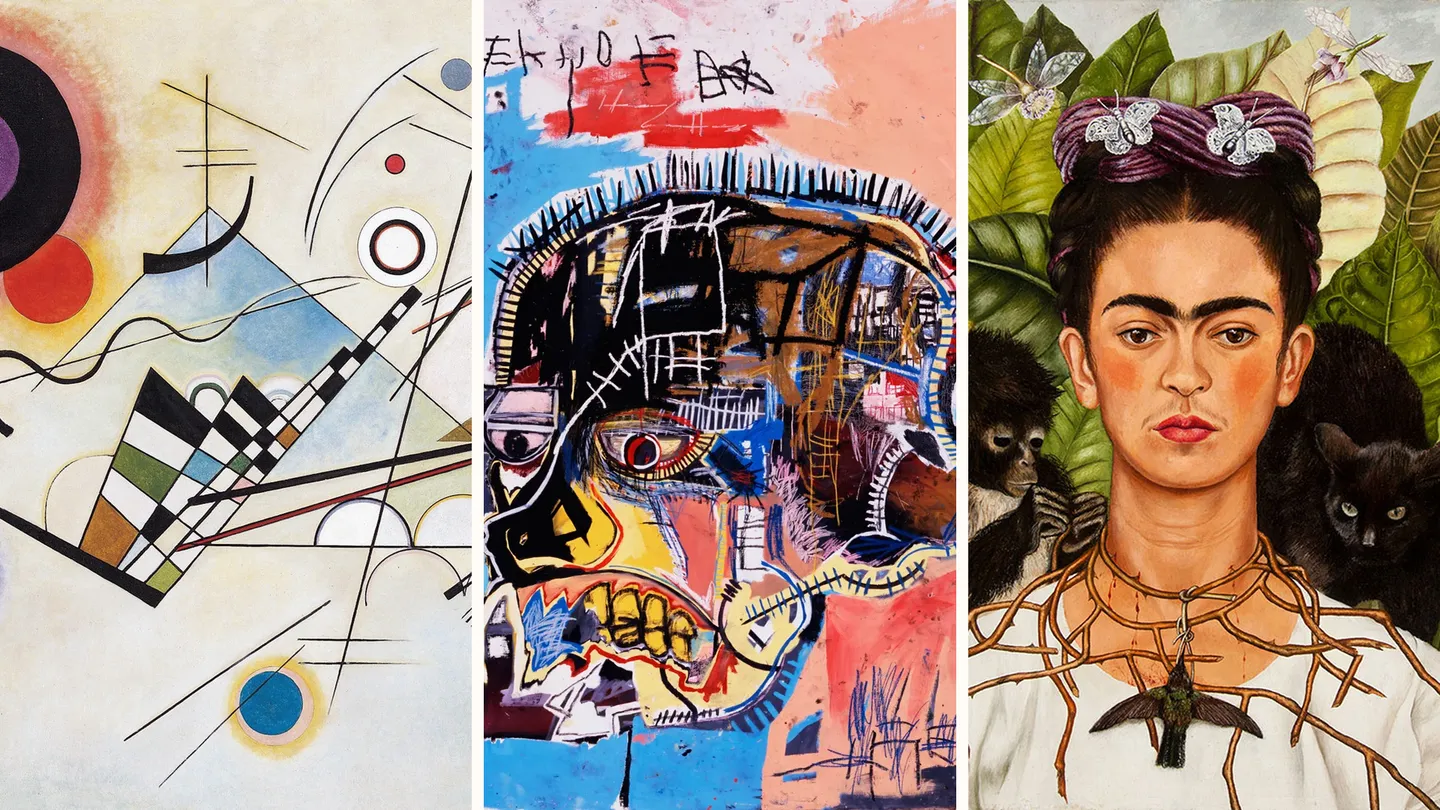
Artwork: Wassily Kandinsky, Composition VIII (1923) — Wikimedia Commons, public domain · Jean-Michel Basquiat, Untitled (1981) — The Broad; © Estate of Basquiat / Artestar; photo: Douglas M. Parker Studio · Frida Kahlo, Self-Portrait with Thorn Necklace and Hummingbird (1940) — Harry Ransom Center; © Banco de México / ARS

It’s 9PM, and I’m standing in the art supplies aisle at my local Walmart.
I told my niece we’d do some painting this weekend, so here I am. There are dozens of shades of colours — watercolors, acrylics, oils. She’s five, so we don’t need to go all-out. Will it be any good? No, I’m sure it won’t be. She’s five. But this is how five year olds learn and become great artists after all, isn’t it? I pick a moderately-priced kit, and I’m off to the frozen section for some peas and a box of pierogies.
Does any of that sound remarkable to you? It shouldn’t. What I’ve just described is totally pedestrian — entirely unremarkable. And that’s why it makes recent discourse around AI so puzzling.
Let me elaborate.
It wasn’t always this way.
For most of history, painters made their own paint. They imported pigments from a great distance on sailing ships, mixed them by hand, ground them with oil, stored them in pig bladders, and had to use them before they went dry or spoiled. It was incredibly difficult to do art, and so incredibly expensive that ‘painting’ was mostly wealthy patrons getting portraits made of themselves or commissions of the church.
This is, in a sense, the entire history of modern art: Italy and Spain became great centres of art for this reason. Venetian businessmen — their wealth built off of trade — parlayed that advantage into dominant leads in the arts and sciences.
It was only later, over time, that paints became a manufactured good. They ended up in tubes, sold in stores, capped and preserved so they could last for years. This meant more colours appeared, because more could be used. You no longer had to grind or mix your own. They were more consistent and cheaper.
Entire genres eventually emerged because art media became more diverse, and through improved distribution, accessible to entirely new classes of people. We got Picasso. Basquiat. Kandinsky. Kahlo. All because art wasn’t so expensive it needed to be portraits of wealthy merchants’ wives and could be interesting.
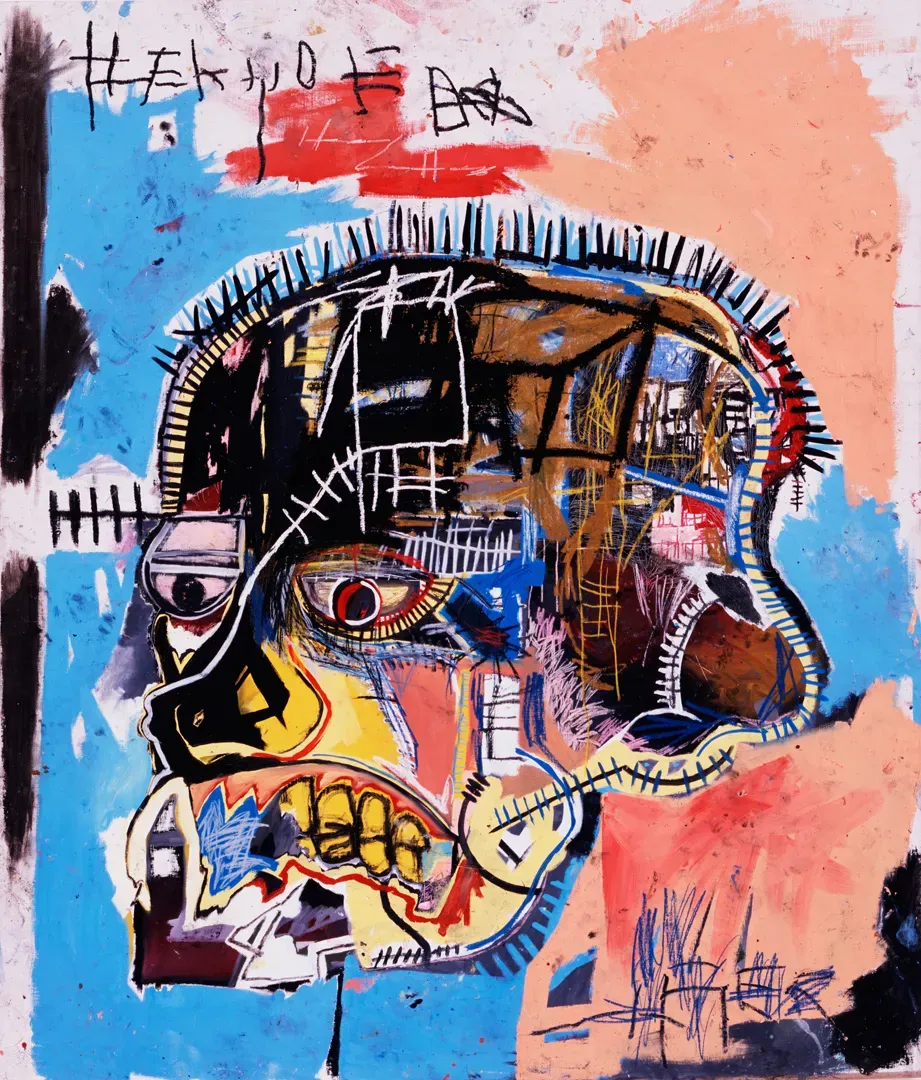
The media got cheaper, the skill of mixing pigments and doing trade no longer became crucial and yet art didn’t disappear. It wasn’t devalued. There are more paintings than ever, art is more accessible than ever, we have new forms of art that are derivative of the art that came before. Portraits are no longer the domain of kings and have such little cost that billions of them are taken every day in new interesting ways and new places all over the world. Pigments are now often pixels and now effectively have no cost at all. We paint freely and without restriction in any colours and of any subjects we like in any style we please, and people are constantly pushing the boundaries of all of those things.
It’s all a little strange, isn’t it?
Fears around what AI could mean for humans have been simmering for the last two years or so, but they became a full-on rolling boil around a month ago when OpenAI and Anthropic announced a series of proofs to a number of long-standing unsolved problems in mathematics, and with the near-simultaneous release of Anthropic’s Opus 5.5, a model notably exceptional at arts and sciences.
Feeling threatened, Mathematicians began publicly talking about losing their purpose. What’s the point in doing math, when the machine can do it? The gaming community (always in an uproar about something or other) has meanwhile turned to purity tests and — most recently — the review-bombing of indie-darling developer House House for using AI to fix bugs on their recently-released game Big Walk, under the premise that AI will destroy the discipline itself, or make it ‘slop’.
We have just made some of the hardest things people do more accessible, and somehow the conversation has become about the possibility of those things dying out.
We’ve done this before: That’s not what happens.
What happens when millions of people suddenly have access to capabilities that were previously reserved for a privileged few? Picasso. Basquiat. Kandinsky. Kahlo.
The Coming Renaissance
This doesn’t just apply to one field. The same is true of music, science, literature, engineering, film, and every other discipline in which human ambition has historically been constrained by the cost of turning an idea into reality. Those fields don’t evaporate when innovation happens — they move faster, become greater.
The printing press exploded global literacy and made possible nearly all of the all-time great works of fiction, every newspaper ever written, and every textbook, too — revolutionizing the education system. From those sprung dozens of other descendent technologies: The laptop I’m typing this on (and the device you’re reading it on!) wouldn’t have happened without the printing press happening first.
Behind every solved problem and unexplored avenue is ten more previously out of reach, and we’ve barely scratched the surface. How many films have never been made because somebody couldn’t afford a camera crew? How many games were never developed because somebody couldn’t program? How many scientific hypotheses were never tested because the people who thought of them lacked the resources to investigate them?
These aren’t examples of creativity that AI is threatening to replace. They’re examples of creativity that never got a chance to exist in the first place. Every time we’ve expanded the capabilities of our tools, we’ve expanded the number of people who can participate, the range of ideas they can pursue, and the boundaries of what we consider possible.
And so we reach a new renaissance: My niece will paint this weekend. It honestly probably won’t be great. But she will be painting, and maybe one day, she’ll discover something nobody has ever done before. Millions of people will be doing the same, and millions more will be using AI to help them do new math, new games, and do many more.
We didn’t run out of things to paint when paint became cheap. I don’t think we’re about to run out of science to discover or things to imagine, either.
Don’t worry, kids: You will have purpose.